
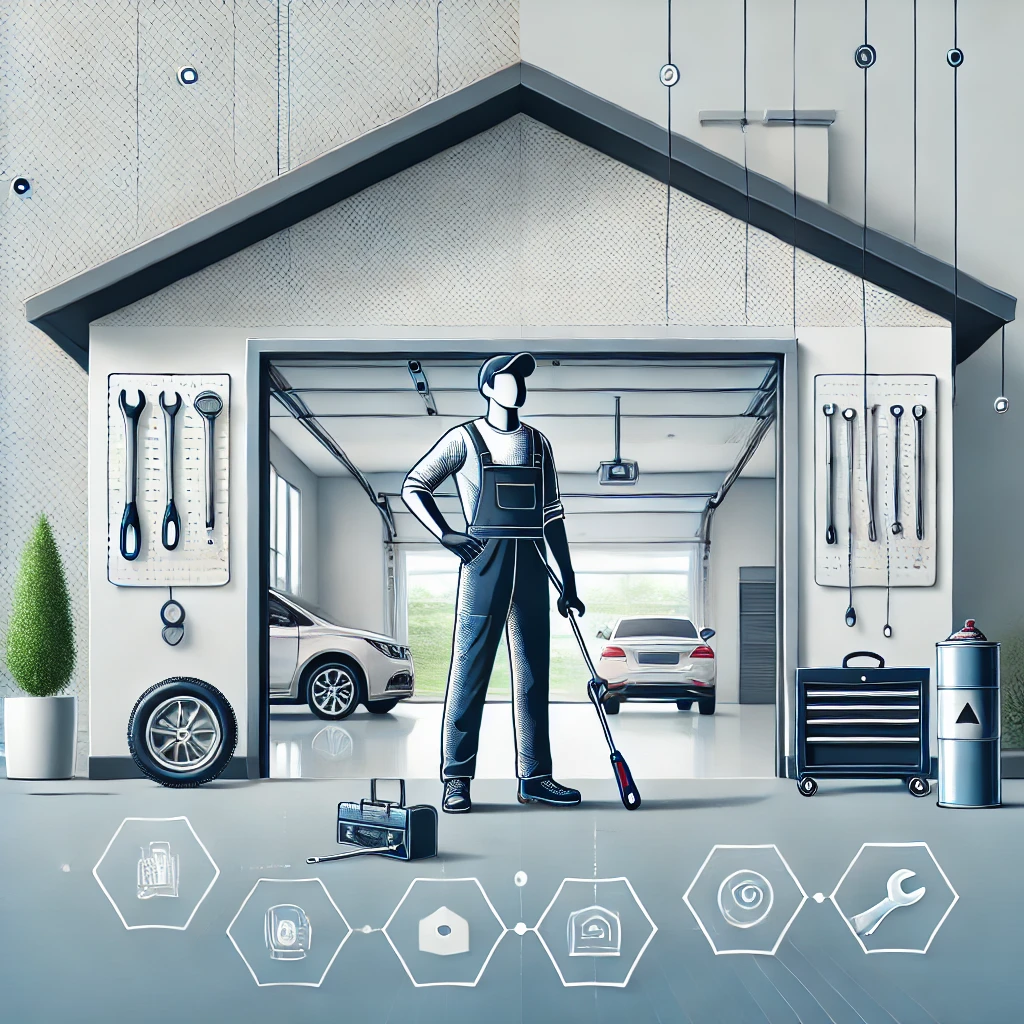
Garage door maintenance is really a question about lifespan. A residential door is one balanced system, not a collection of separate parts, and the springs, cables, rollers, weatherseal, and opener all wear together. When one piece drifts out of tune, it quietly shortens the life of everything else. Maintenance is simply the work that slows that wear and stretches the most years out of each component. This guide gives you the complete picture at a summary altitude, then points you to the deeper checklists and service pages where each topic is covered in full.
What actually wears out, and how maintenance extends each part's life
Every garage door has a handful of parts that carry the load and take the wear, and each one ages in its own way. Understanding the wear pattern is what tells you where your upkeep dollars and minutes go the furthest.
The springs do the heavy lifting on every open and close, and they are rated by cycles rather than years. Lubrication, correct balance, and early detection of fatigue all slow how fast those cycles wear them out, which is why a maintained spring set so often outlasts a neglected one. Because they hold tremendous tension, spring work itself belongs to a technician, and you can read what that involves on our garage door spring repair and replacement page. The cables and rollers guide the door along its tracks, and they fail from fraying, rust, and worn bearings that turn smooth travel into grinding and binding. Clean tracks and light lubrication buy them years, and worn ones are a straightforward swap covered under cable and roller replacement. The weatherseal along the bottom hardens, cracks, and flattens with sun and age until it lets in dust, drafts, and water. The opener is the motor and brain of the system, and it lasts longest when the door it lifts stays balanced and light, since an out-of-tune door forces the motor to strain on every cycle; when an opener is worn past its prime, our garage door opener installation page explains the upgrade path. The hands-on, step-by-step routine for caring for each of these parts lives in our full maintenance checklist, so this page stays at the overview level.
The Inland Empire climate: why local doors wear faster
A garage door in Riverside and across the Inland Empire works in a harsher environment than the national average, and the local climate is the part of this story no generic maintenance guide covers. Hot, dry summers and the blowing dust that comes with them grind into the rollers, tracks, and bearings, acting like a slow abrasive on every moving surface. Santa Ana wind events drive grit deeper into the mechanism and load the door and opener with extra force. On top of that, the large day-to-night temperature swings the region is known for make the metal expand and contract again and again, which fatigues springs faster and hardens the weatherseal until it cracks.
None of this is a reason for alarm, but it does mean local doors benefit from cleaning and lubrication on a tighter rhythm than a door in a mild, damp climate would need. Wiping grit off the tracks and keeping the moving parts lightly lubricated is the single most effective habit for an Inland Empire door, because it directly counters the dust and dryness that do the most damage here. Maintenance that respects these local stresses is what keeps a door reliable for the long term rather than aging out early.
A brief homeowner maintenance routine
Most of what a homeowner can do safely comes down to a short, repeatable rhythm: look, listen, lightly lubricate, run a quick balance test, and confirm the safety reverse. Looking and listening catches frayed cables, rust, and the new squeaks or rumbles that signal dryness or worn bearings before they become failures. A light lubrication of the rollers and hinges keeps everything quiet, a balance test (disconnecting the opener and lifting the door by hand to see if it holds its position) tells you whether the springs are still doing their job, and a safety-reverse check confirms the door stops and backs off when something is in its path. Rather than re-list every step here, we keep the complete, illustrated version in our full maintenance checklist, which walks through each task in order.
How often to schedule maintenance and a professional tune-up
For most Inland Empire households, the right rhythm is a quick homeowner check about once a month paired with one professional tune-up each year. The monthly look-and-listen pass catches small problems early, and the yearly visit is when a technician confirms the spring tension, inspects the cables and bearings, and verifies the door is balanced and aligned for safe, smooth operation. If your door cycles many times a day or lives in an especially dusty, wind-exposed spot, you may want to service it more often. For the full schedule and the signs that it is time, see how often to service a garage door, and when you are ready, you can book a professional tune-up with our team.
DIY limits versus a professional tune-up
The line between homeowner maintenance and professional work is about tension and safety, not pride. Cleaning, light lubrication, tightening accessible hinge and bracket bolts, and running the balance and safety-reverse tests are all well within reach for a careful homeowner. The high-tension springs, the lift cables, and the bottom brackets are not. Those parts store enough force to cause serious injury, and adjusting or replacing them calls for the right tools, training, and an insured, background-checked technician. When a balance test fails or a cable looks frayed, that is the moment to bring in a pro through our garage door repair service rather than risk it.
Trusting that work to the right company matters as much as the work itself. We build that trust on a verifiable local identity rather than any credential claim: 24/7 Garage Door and Gate Services LLC is a Riverside business serving the Inland Empire, our technicians are insured and background-checked, and we hold a 4.7-star rating from 115 Google reviews. You always get an upfront written quote before any work begins, and you are welcome to verify our business identity before you book.
Why staying on a maintenance schedule pays off
The payoff for staying on a schedule is straightforward. A maintained door is a safer door, because the safety reverse, the cables, and the springs are all checked before they can fail under load. It is a more dependable door, because catching a tired roller or a drifting balance during a planned visit prevents the kind of sudden breakdown that traps a car in the garage at the worst possible moment. And it is a longer-lived door, because slowing the wear on each part stretches the whole system's years out toward the top of its range instead of the bottom. For the complete case, including the real costs of skipping it, read why regular maintenance matters.
Springs and cables are under extreme tension and are the leading cause of garage door injuries. Never try to adjust or replace a spring or cable yourself. If the door feels heavy, hangs crooked, or you hear a loud bang, stop using it and call a professional. We answer 24/7 at (909) 264-7415.
Book your Inland Empire garage door tune-up
Keeping a garage door reliable for the long term is mostly about a steady rhythm of small attention and one professional visit a year, tuned to the dust, wind, and heat of the Inland Empire. When you are ready for the professional side of that routine, our team is here to confirm the springs, cables, balance, and opener and give you a clear written quote first. You can book a professional tune-up with us, or schedule your tune-up online in a couple of minutes. To talk it through with a real person any time, call or text (909) 264-7415.
Frequently asked questions
How many years should a well-maintained garage door last?
With regular maintenance, a quality residential garage door commonly lasts 15 to 30 years, and the opener often 10 to 15 years. The single biggest factor is whether the springs and balance are kept in good condition, because a door that runs out of balance forces every other part to wear out early. A consistent routine plus a yearly professional tune-up is what carries a door to the top of that range rather than the bottom.
Does regular maintenance really extend the life of garage door springs?
Yes, and the effect is significant. Springs are rated by cycles rather than years, and proper lubrication, correct balance, and early detection of fatigue all slow how fast those cycles wear them down. In the dry, dusty Inland Empire climate, springs that are kept clean and lightly lubricated resist corrosion and brittleness far better than neglected ones, which is why a maintained spring set often outlasts a neglected one by years.
How does the Inland Empire climate affect how long my garage door lasts?
Local conditions are tougher on a door than many homeowners expect. Hot dry summers and blowing dust grind into rollers, tracks, and bearings, Santa Ana wind events drive grit into the moving parts, and large day-to-night temperature swings repeatedly expand and contract the metal, which fatigues springs and hardens the weatherseal. Maintenance that accounts for these local stresses, especially cleaning and lubrication, is what keeps an Inland Empire door reliable for the long term.
What part of a garage door fails first if I skip maintenance?
The springs and the balance system usually show trouble first, because they carry the door's weight on every cycle and are the most sensitive to wear. Once balance drifts, the strain cascades to the rollers, the cables, and the opener motor, so a small neglected issue becomes a chain of failures. Catching that drift early during routine maintenance is the most effective way to protect the whole system and avoid a sudden breakdown.
Can maintenance make my garage door quieter as it ages?
It can, and noise is one of the clearest early signals. Most new squeaks, rumbles, and pops come from dryness, worn roller bearings, or loosening hardware, all of which are normal aging that maintenance addresses. Restoring lubrication, replacing worn rollers, and snugging the accessible hardware typically brings an older door back to near-quiet operation, and it also slows the wear that the noise was warning you about.
Is a maintenance plan worth it for an older garage door?
Often yes, because an older door has more accumulated wear and benefits most from being caught before a part fails completely. Regular attention lets an insured technician replace tired rollers, cables, or seals on your schedule rather than during an emergency, which keeps an aging door safe and dependable for several more years. For many homeowners it is the difference between a planned tune-up and a car trapped behind a door that quit.
How can I tell if my garage door has been well maintained over the years?
A well-maintained door runs quietly and evenly, holds its position when you stop it halfway, and shows clean tracks, intact weatherseal, and cables with no fraying or rust. If the door slams, hesitates, sags on one side, or feels heavy by hand, those are signs that maintenance has lapsed and the lifespan of the parts is being shortened. A professional inspection can confirm the true condition and tell you what it will take to restore long-term reliability.
How do I verify the company servicing my door is trustworthy for ongoing maintenance?
Look for one verifiable local identity, technicians who are insured and background-checked, a real review history, and upfront written quotes before any work. 24/7 Garage Door and Gate Services LLC is based in Riverside, serves the Inland Empire, and holds a 4.7-star rating from 115 Google reviews, and you can reach a real person any time at (909) 264-7415. A company you can reach again next year is the one worth trusting with a long-term maintenance relationship.