
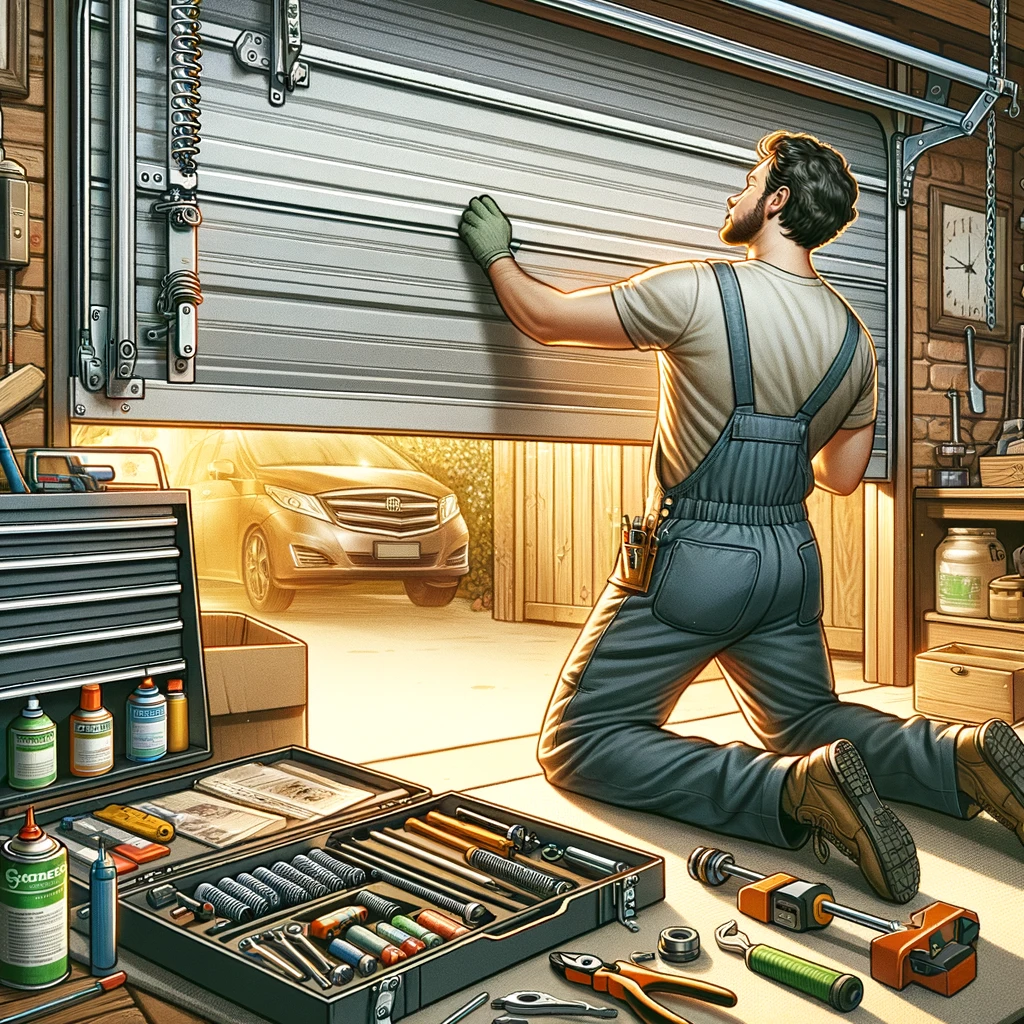
A garage door is easy to take for granted right up until it stops working. It is the largest moving part of most homes, it cycles thousands of times a year, and for many families it is the main way in and out of the house. That is exactly why it is worth understanding the case for upkeep, not as a chore, but as a small habit that quietly protects your time, your money, and your safety. This page is about the why rather than the how. If you want the broad picture of how a door wears and how maintenance extends its life, start with our complete garage door maintenance guide. Here we focus on what neglect really costs and what upkeep really pays back.
What actually breaks when you skip maintenance
Neglect almost never causes one clean failure. It sets off a chain, where a small ignored issue quietly shortens the life of the parts around it until something gives way. The springs carry the door's weight on every open and close, and a spring that is never lubricated or inspected fatigues until it snaps, which is sudden, loud, and often leaves the door dead in place. That is the work behind garage door spring repair and replacement, and it is the failure most homeowners feel first.
The cables and rollers guide the door along its tracks, and when they are left to fray, rust, and wear, a tired cable can let the door drop or jump off track, and a worn roller turns smooth travel into grinding and binding. Catching that early is a straightforward cable and roller replacement instead of a tangled, off-track mess. Meanwhile, when balance drifts because the springs are tired, the opener has to drag a door that is heavier than it was designed to lift, and the motor strains on every cycle until it burns out years before its time. The weatherseal hardens and cracks until it stops keeping dust and water out, and a safety reverse that is never tested can fail silently, so you only learn it stopped working at the worst possible moment. Each of these starts small. Maintenance is simply the habit of catching them while they are still small.
The hidden cost of a breakdown (and why it always comes at the worst time)
A door fails under load, which is precisely when you are using it. That is why a neglected door so often quits on a busy morning, trapping the car in the garage while you are already running late. A worn spring or a tired cable holds on through cycle after cycle until the stress of one more finishes it, and that moment lands when the door is carrying its full weight, not when it is sitting quietly. The result is the scramble nobody wants: a stuck car, a juggled schedule, and a hunt for an after-hours fix when you least have time for it.
There is a second, quieter cost. When one part fails under load, it rarely fails alone. A snapped spring can let the door slam down and bend a panel or knock a roller out of its track, and a single broken component can damage the others around it, so a problem that would have been a minor tune-up becomes a larger repair. That is the difference between planned upkeep and an unplanned emergency. You can almost always catch a fraying cable or a drifting balance early with a quick garage door repair visit, but once a door has failed, you are into emergency garage door repair territory, on the door's schedule rather than your own.
Why the Inland Empire climate makes neglect cost more here
The case for upkeep is sharper in the Inland Empire than almost anywhere, because the local climate works against a garage door in ways a generic maintenance guide never accounts for. The heat and dryness of a long local summer leave fine dust on every surface, and that grit behaves like sandpaper on rollers, bearings, and the track each time the door cycles. When the Santa Ana winds arrive, they pack even more of that abrasive into the mechanism and shove against the panels with real force. And because daytime and nighttime temperatures here can swing so far apart, the metal is constantly expanding and shrinking, which tires out the springs and dries the weatherseal until it splits.
Left alone, all of that quietly chips away at parts a homeowner in a mild, damp climate would rarely think about, so the very same skipped maintenance punishes a local door harder. The encouraging side is that the payoff for staying on top of upkeep is bigger here too. A quick wipe of the tracks and a light coat of lubricant on the moving parts pushes back directly against the grit and dryness that cause the most trouble in this region. The hands-on steps for that live in the full maintenance checklist, and the right rhythm for our climate is covered in how often to service a garage door.
The payoff: what regular maintenance buys you
Every cost of neglect has a mirror image, and that mirror is the payoff of upkeep. A maintained door lasts longer, because slowing the wear on the springs, cables, rollers, and opener stretches the whole system toward the top of its lifespan instead of the bottom, which is the direct answer to the burned-out motor and the snapped spring. It breaks down far less often, because catching a tired roller or a drifting balance during routine attention prevents the kind of sudden failure that traps a car in the garage, which is the direct answer to the worst-possible-moment breakdown.
It is safer, because the safety reverse, the cables, and the springs are all verified before they can fail under load, which is the direct answer to the silently failing safety systems. It is quieter, because restoring lubrication and replacing worn rollers brings an aging door back toward smooth, near-silent operation, which is the direct answer to the grinding and rattling that creep in with neglect. And it saves you money and protects your home's value, because catching wear early costs far less than replacing failed parts, and a door that looks cared for and runs cleanly preserves the curb appeal of the largest feature on the front of your house. The contrast is the whole point: the same attention that prevents the costs delivers the benefits.
Upkeep is simple, and you do not have to do it alone
The good news is that staying ahead of all of this is not complicated. The hands-on steps, the things a careful homeowner can safely do, are laid out in the full maintenance checklist. The right rhythm, how often to do a quick check yourself and how often to bring in a pro, is covered in how often to service a garage door. And the complete overview that ties it all together is our complete garage door maintenance guide. You do not have to absorb all of it at once; you just have to start the habit.
The one boundary that matters is tension. The high-tension springs, the lift cables, and the bottom brackets store enough force to cause serious injury, and that work belongs to a professional, not a weekend project. When a balance test fails or a cable looks frayed, that is the moment to call. Trusting that work to the right company matters as much as the work itself, and we earn that trust on a verifiable local identity rather than any credential claim: 24/7 Garage Door and Gate Services LLC is a Riverside business serving the Inland Empire, our technicians are insured and background-checked, and we hold a 4.7-star rating from 115 Google reviews. You always get an upfront written quote before any work begins, and you are welcome to verify our business identity before you book. When you are ready, you can book a professional tune-up or schedule your visit online in a couple of minutes.
Springs and cables store enormous energy and are the leading cause of garage door injuries. Never adjust, loosen, or remove a spring, cable, or bottom bracket yourself. If the door feels heavy, hangs crooked, or you hear a loud bang, stop using it and call a professional. Call or text us any time at (909) 264-7415.
Frequently Asked Questions
What really happens if I never maintain my garage door?
Neglect rarely causes one clean failure; it sets off a chain. A spring that is never lubricated or checked fatigues and eventually snaps, an unbalanced door makes the opener strain until the motor wears out, frayed cables can let the door drop or jump its track, and a safety reverse that is never tested can quietly stop working. Each ignored issue shortens the life of the parts around it, so a small problem you could have caught early becomes a larger, more disruptive repair later.
Why does a neglected garage door always seem to break at the worst time?
Because a door fails under load, which is when you are using it, usually on a busy morning as you try to leave. A worn spring or tired cable holds on until the stress of one more cycle finishes it, and that moment tends to land when the door is carrying its full weight. Regular upkeep moves that failure off your worst day and onto a planned visit, so you are not left with a car trapped in the garage and a scramble for an after-hours fix.
Is skipping maintenance actually a safety risk for my family?
Yes. A garage door carries significant weight and stored tension, and the parts that keep it safe, the springs, the cables, and the auto-reverse, are exactly the ones that degrade quietly when no one checks them. A failed reverse can let a closing door come down on a person or pet, and a snapped spring or cable releases a lot of energy at once. Keeping those safety systems verified is one of the strongest reasons not to let upkeep lapse.
Does the Inland Empire climate make skipping maintenance worse?
It does. Hot dry summers and blowing dust grind into the rollers, tracks, and bearings like a slow abrasive, Santa Ana wind events push grit deeper into the moving parts, and the large day-to-night temperature swings expand and contract the metal until springs fatigue and the weatherseal hardens. A neglected door ages faster here than in a mild climate, which is the same reason consistent upkeep pays off more for an Inland Empire home.
What does regular maintenance actually save me in the long run?
The biggest return is avoided emergencies and a longer-lived system. Catching a tired roller, a drifting balance, or a fraying cable during routine attention prevents the kind of sudden breakdown that cascades into damaging other parts, and it stretches the door and opener toward the top of their lifespan instead of the bottom. You also get a safer, quieter door, and you protect the curb appeal and value the door adds to your home.
Can keeping up with maintenance really make my door quieter?
In most cases, yes, and the noise is a clue worth listening to. New squeaks, rumbles, and pops usually come from dryness, worn roller bearings, or hardware that has loosened over thousands of cycles, all of which upkeep addresses. Staying ahead of that wear keeps an older door running close to quiet, and just as importantly it slows the deterioration the noise was warning you about before it turns into a failure.
How does maintenance protect my home's value and appearance?
The garage door is often the largest feature on the front of a house, so its condition shapes curb appeal at a glance. Upkeep prevents the rust, peeling paint, sagging, and grime that make a door look tired, and it keeps the door operating smoothly for anyone evaluating the home. A door that looks cared for and runs cleanly reads as a well-maintained house, while a neglected, noisy, or crooked one quietly works against you.
How do I know the company I trust with maintenance is the real thing?
Look for a verifiable local identity, technicians who are insured and background-checked, a genuine review history, and an upfront written quote before any work begins. 24/7 Garage Door and Gate Services LLC is based in Riverside, serves the Inland Empire, and holds a 4.7-star rating from 115 Google reviews, and you can reach a real person any time at (909) 264-7415. A company you can find again and reach next year is the one worth a long-term maintenance relationship.