After thousands of service calls across Riverside and the Inland Empire, we can tell you that most garage door trouble traces back to the same handful of parts. A door is a heavy, spring loaded machine you use several times a day, and out here it has to do that in real heat, blowing dust, and the occasional Santa Ana wind event. This guide walks through the problems we get called for most, the early warning signs of each, the checks you can safely make yourself, and the moment it makes sense to stop and bring in a technician. No guesswork, no upselling, just what we actually see on the truck.
The door won't open or close
A door that simply refuses to move is the single most common call we get. The good news is that the cause is often something minor. The signs that point to an easy fix are a remote that works intermittently, a door that responds to the wall button but not the remote, or a door that starts to close and then reverses. Run through these checks first:
- Try the wall button. If the wall control works but the remote does not, replace the remote and keypad batteries before anything else.
- Look at the safety sensors. The two photo eyes near the floor must point straight at each other with nothing in between. A blinking opener light usually means a sensor is blocked or knocked out of line.
- Check that the opener has power. A tripped breaker or an unplugged unit is more common than people expect.
- Watch and listen. If the motor hums but the door does not move, or you heard a bang earlier, a spring or cable may have failed. Stop here and do not force it.
If the basics do not solve it, the fault is usually deeper in the opener or the door hardware, which is where a proper diagnosis pays off.
The door is off track
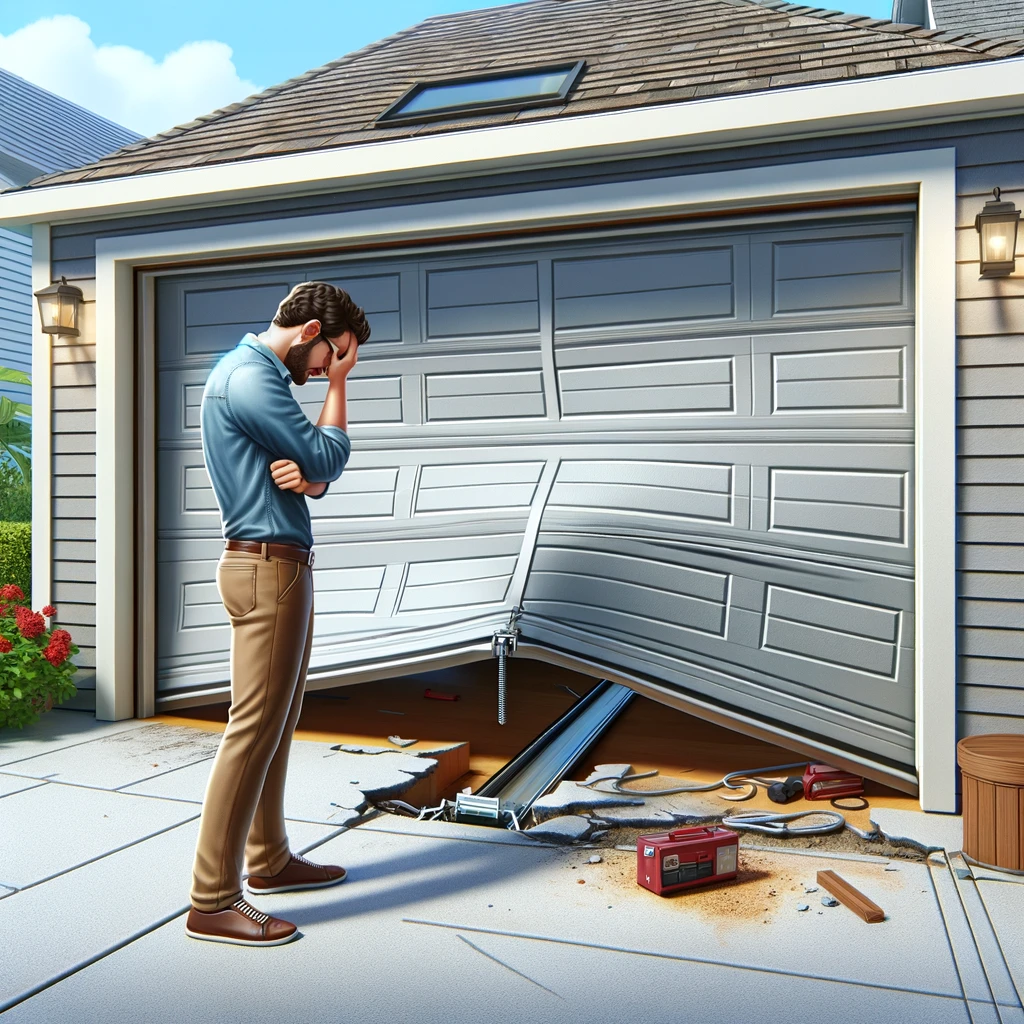
An off track door is hard to miss: one side hangs lower than the other, a roller has popped out of the metal channel, and the door sits crooked or jams partway through its travel. The usual triggers are a vehicle bumping the door, a broken lift cable, a worn roller, debris caught in the track, or track bolts that have loosened over the years. Because the door is heavy and held in balance by springs under tension, an off track door can be genuinely unsafe to operate.
The most important thing you can do is stop pressing the opener. Running the motor against a bound door bends the track further and can snap a cable. Keep cars and people clear of the opening and reach out. We cover this in depth in our guide to what to do when your garage door comes off its track, and our off track garage door repair in Riverside is usually a same visit fix.
A broken torsion or extension spring
Springs do the heavy lifting on your door, counterbalancing its weight so the opener (and your back) only have to manage the difference. They are also a wear item with a finite number of cycles, so they are one of the most common failures we replace. There are two types: torsion springs mounted on a bar above the door, and extension springs that run along the horizontal tracks. The warning signs are unmistakable:
- A loud bang from the garage, often described as a gunshot, when the spring snaps.
- A visible gap in the coil of a torsion spring above the door.
- The door feels extremely heavy or will only rise a few inches before stopping.
- The opener strains, then gives up, because it was never built to lift the full weight of the door alone.
Spring replacement is not a do it yourself job. A wound torsion spring stores enough energy to cause serious injury, so this is one to leave to a tech with the right winding bars and a matched replacement. Our garage door spring repair and replacement service handles both spring types safely.
A snapped or frayed cable
The lift cables work alongside the springs to keep the door square and controlled as it travels. When a cable frays or snaps, the door often pulls to one side, hangs at an angle, or comes off its track entirely. You may see a loose wire coiled near the bottom bracket or notice the door no longer sitting level in the opening. Like springs, cables are under high tension, so do not pull on them or try to rethread them yourself. A snapped cable frequently comes paired with a spring or roller issue, so it is worth having the whole balance system checked at once rather than chasing one symptom.
A noisy or grinding door
Some sound is normal, but new or louder noise is your door asking for attention. The type of sound is a clue to the cause:
- Squeaking and rattling usually means dry hinges, rollers, and springs. A proper garage door lubricant on the moving parts quiets most of it.
- Grinding often points to worn rollers or a track problem.
- A rhythmic clunk can be a cracked roller or a loose chain on the opener.
- A single loud bang almost always means a spring just let go.
Lubrication is the right first move, and in our heat it is worth doing a couple of times a year because the old grease dries out fast. If the noise continues after lubricating, have the rollers and hardware inspected before a small issue turns into a breakdown.
Some problems are not safe to troubleshoot at home. If the door feels heavy, hangs crooked, has a frayed cable, or you heard a loud bang, the springs or cables may be involved. These parts are under extreme tension. Stop using the door and call a professional. We answer 24/7 at (909) 264-7415, and most of the Inland Empire sees a technician in about 60 to 90 minutes.
Opener and remote failures
When the door hardware is fine but nothing responds, the opener itself is often the suspect. Signs include a remote that has stopped working even with a fresh battery, a wall button that does nothing, an opener that runs but the door does not move (a stripped trolley gear), or a unit that randomly opens and closes. Start by reprogramming the remote and checking the breaker. Older motors, worn gears, and failing logic boards are common on units that have run for a decade or more, and at that point repair or a modern, quieter opener is the better call. We cover both in our garage door opener repair and installation in Riverside service, including LiftMaster, Chamberlain, and Genie systems.
Misaligned safety sensors
Those two photo eye sensors near the floor are required safety devices, and they are responsible for a lot of frustrating, intermittent behavior. The classic sign is a door that starts to close and then reverses back up, often with the opener light flashing. Causes are simple: a sensor bumped out of alignment, a dirty lens, a cobweb or leaf in the beam, or sun glare at certain times of day. You can usually fix this yourself by wiping the lenses, clearing the path, and nudging the brackets until both indicator lights glow steady. If they will not hold alignment, the wiring or a bracket may be damaged.
Weather damage: Santa Ana winds and heat
Inland Empire weather is hard on garage doors in ways homeowners do not always connect. Strong Santa Ana winds push against the large flat panel of the door, which can bow sections and even knock a door off its track. Relentless summer heat dries out the lubricant on rollers and hinges, fades and cracks the weather seal along the bottom, and makes the whole door run rougher. Blowing dust and grit pack into the tracks and accelerate roller wear. The signs are a door that has started running noisily over the summer, a bottom seal that no longer keeps light and dust out, or visible bowing after a windstorm. A simple seasonal tune up that re-lubricates the door, checks the balance, and replaces worn seals prevents most weather related failures before they strand you.
When to DIY and when to call a pro
Plenty of everyday issues are well within reach at home: refreshing remote and keypad batteries, clearing and realigning the safety sensors, lubricating the moving parts, and clearing small bits of debris from the tracks will resolve a good share of the problems above. The line to respect is anything involving the springs, cables, or a door that is off track or feels heavy. Those parts store serious energy, and forcing the issue is how a quick repair becomes an injury or a much bigger bill. When the trouble points to a spring, a cable, a damaged track, a control board, or an opener fault, the safe and reliable path is professional service. You can browse everything we handle on our garage door repair hub. We are owner operated, insured, background checked, and we give a free estimate with an upfront price before any work starts. Call or text us at (909) 264-7415, day or night.