
Your garage door has a normal sound, the familiar hum and rumble it makes every day. So when a new noise shows up, a grind, a squeal, a sudden bang, you tend to notice. Those sounds are worth paying attention to, because a door often tells you something is wrong long before it actually fails. In our work across Riverside and the Inland Empire, many of the repairs we make could have been smaller and simpler if the early noise had been addressed. Here is how to read what your door is trying to tell you.
Grinding or scraping
A grinding or scraping sound usually points to friction where there should not be any. The most common causes are worn rollers, dry hinges, or a roller rubbing against the track. In our dry climate, the factory lubrication can dry out and leave metal grinding on metal. Often a proper cleaning and fresh lubrication quiets things down, but persistent grinding can mean rollers that are worn out and due for replacement before they crack or jump the track.
Squeaking or squealing
High pitched squeaking is one of the most frequent complaints, and one of the most harmless. It typically means the moving parts are dry and asking for lubrication. Rollers, hinges, and springs all benefit from the right lubricant applied a couple of times a year. If a squeal persists after lubrication, a roller or hinge may be wearing out. It is a good reminder of why regular service helps, which we cover in our guide on how often to service your garage door.
Banging or a loud snap
A sudden, loud bang is the noise to take seriously. The most common reason is a broken torsion spring, which can release its tension with a sound like a gunshot. If you heard a bang and now the door feels very heavy, will not open, or opens only partway, a broken spring is the likely culprit. This is not a do it yourself repair, since springs hold dangerous tension. Stop using the door and reach out.
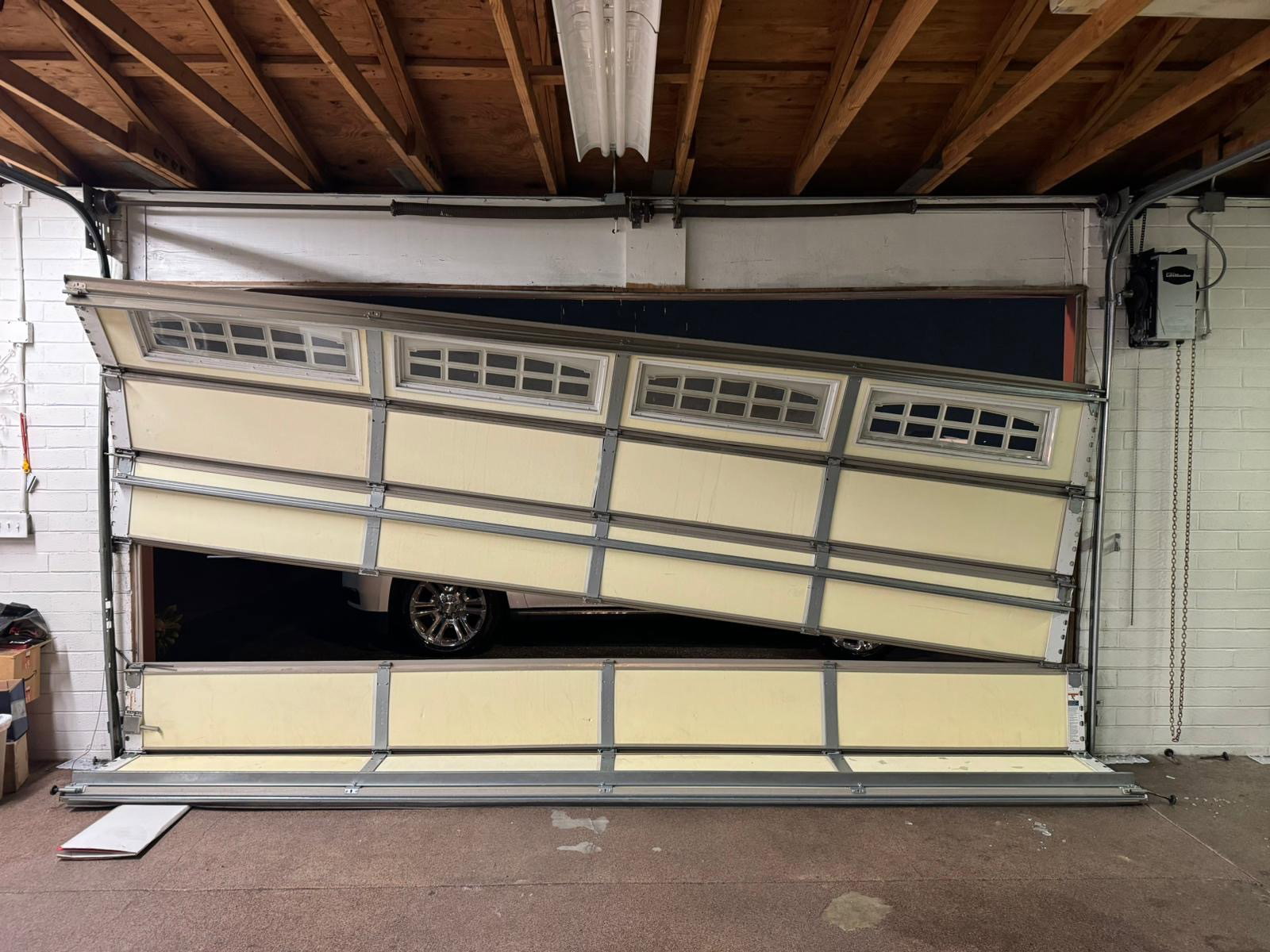
A banging that happens during travel, rather than all at once, can instead point to loose hardware, a worn cable, or a door drifting out of alignment, which can lead to an off track door. Our guide on what to do when a door comes off its track walks through that situation step by step.
If your door suddenly became hard to lift and you heard a sharp snap, please do not keep forcing it open with the opener. A broken spring leaves the full weight of the door on the motor and cables, which can cause more damage or injury. Call or text us at (909) 264-7415 and we will handle the tensioned parts safely.
Rattling or vibrating
A rattle, especially one that gets worse over time, is often the sound of hardware that has shaken loose. Thousands of open and close cycles gradually back out nuts and bolts. Rattling can also come from a chain drive opener that has gone slack, or from door sections that need tightening. Snugging up the hardware and checking the opener usually solves it, and it is a routine part of a tune up.
Rubbing, popping, or clicking
Smaller sounds have their own clues. A rubbing noise can mean the door is shifting side to side as it travels, often a sign of worn rollers or a track that needs adjustment. Popping or clicking as the door moves can come from stiff hinges, a section binding, or rollers struggling in the track. None of these are emergencies on their own, but together they tend to signal a door that is overdue for service.
Straining or humming from the opener
Sometimes the noise is the opener, not the door. A motor that grinds, hums without moving the door, or strains audibly may be working against an unbalanced door or wearing out internally. Before blaming the opener, it is worth confirming the door itself is balanced, because a tired spring can make a healthy motor sound like it is dying. If you are weighing a repair against a replacement, our roundup of the best garage door openers for 2026 can help you compare.
What about a noisy gate?
Automatic driveway gates speak the same language. A sliding gate that grinds may have debris in its track, while a swing gate that creaks is usually asking for hinge lubrication. The diagnostic mindset is identical to a garage door. If you are also thinking about gate options, our comparison of sliding versus swing driveway gates covers how each style wears and where the noise tends to come from.
When to call a pro
A useful rule of thumb: noises that come with a change in how the door moves deserve prompt attention, while a simple squeak can often wait for your next lubrication. Call sooner rather than later if you notice any of the following:
- A loud bang followed by a heavy or stuck door, which points to a spring.
- Grinding that does not improve after cleaning and lubrication.
- The door moving unevenly, sagging, or coming off track.
- The opener straining, humming, or failing to move the door.
Most door noises are easy to diagnose and fix, especially when caught early. If yours has started making a sound you have not heard before, send us a short video with the audio and we will tell you what we are hearing. We answer 24/7 across Riverside and the Inland Empire, with a free estimate before any work begins.