
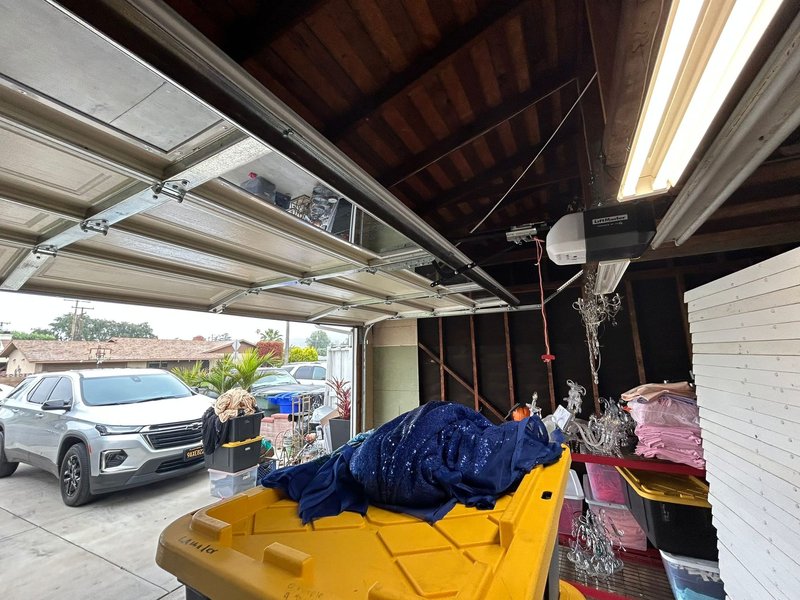
A garage door is the largest moving part of most homes, and it is surrounded on all four sides by a gap that weather, dust, and animals are constantly trying to exploit. In Riverside and the broader Inland Empire, that challenge is more severe than in most of California. Summer afternoons regularly push past 105 degrees Fahrenheit. Santa Ana wind events carry fine silt that works into every opening. And the mild winters still bring enough rain to soak a garage floor if the bottom seal has dried out. Weatherstripping is the thin line of defense against all of it, and most homeowners never think about it until something goes wrong.
The Four Sealing Zones Every Homeowner Should Know
Garage door weatherstripping is not a single product. It is a system of four distinct seals, each engineered for a different kind of gap. Understanding what each one does makes inspection and replacement much more straightforward.
- Bottom seal (door sweep): A rubber or vinyl strip attached to the very bottom edge of the door. When the door closes, this strip compresses against the concrete floor, blocking the gap between them. It bears the most abuse because it contacts the ground on every cycle and bakes in direct sunlight when the door is open.
- Top seal: A flexible strip mounted to the horizontal header above the door opening. It presses against the top panel when the door is fully closed. Top seals are often overlooked because they are high up and out of sight, but a cracked top seal allows hot attic-adjacent air to push back into the garage.
- Side seals (jamb seals): Vinyl or rubber strips running vertically along both sides of the door frame. They press against the door panels and block wind-driven rain and dust from sneaking in at the edges.
- Panel-to-panel seals: On sectional doors, thin foam or rubber strips are sandwiched between each horizontal panel. They compress as the door flexes through its curve on the way up and down. These are factory-installed and typically last the life of the door, but they can deteriorate after 15 or more years of desert heat cycling.
A good professional garage door maintenance visit covers all four zones, not just the obvious bottom strip.
Signs That Your Seals Are Failing
Weatherstrip failure is usually gradual, which is why homeowners adapt to the symptoms without connecting them to the door seal. Here is what to look for.
- Visible light around the door edges: Stand inside a dark garage and look at the perimeter of the closed door in daylight. Any strip of light is a strip of air, heat, and dust getting through.
- Dust lines on the floor: After a windy day, fine silt collecting along the inside base of the door is a reliable indicator that the bottom seal no longer makes full contact with the floor.
- Water on the garage floor after rain: If water pools near the base of the door, the bottom sweep has either hardened, cracked, or torn away from its retainer.
- Insects and rodents inside the garage: A gap of even a quarter inch at the bottom corner of the door is enough for mice and many insects to enter. If you are finding evidence of pests, inspect the seals at the floor corners where the side jamb meets the bottom sweep.
- Noticeably higher garage temperatures: A sealed garage in Riverside will still get warm in summer, but an unsealed one can reach temperatures 20 to 30 degrees higher than outside air because the concrete slab radiates heat back up while hot air pours in from the gaps. If your garage feels like an oven by 10 a.m., the seals deserve a close look.
- Cracking or brittleness when you touch the rubber: UV exposure and ozone break down rubber compounds over time. If the bottom seal crumbles when you flex it, it has reached the end of its service life regardless of whether you can see daylight through it yet.
How Long Should Weatherstripping Last in the Inland Empire?
National averages suggest weatherstripping lasts five to ten years. In the Inland Empire, cut that in half for the bottom seal. The combination of direct sun exposure, ozone from the air basin, and the grinding action of debris on the concrete floor is particularly hard on rubber. A bottom seal that would last eight years in a coastal climate may be cracked and stiff after four years in Rancho Cucamonga or Moreno Valley.
Vinyl jamb seals on the sides tend to last longer because they are partially shaded, but they still warrant inspection every two to three years. The foam panel-to-panel strips, as mentioned, rarely need attention unless the door itself is old or was exposed to an unusual event like fire or severe impact.
If your home has an attached garage, aging seals also affect your living space. Air leaking in around the door perimeter puts a measurable load on your HVAC system, particularly the room or hallway directly adjacent to the garage. Replacing a deteriorated seal pays back a portion of its cost in energy savings almost immediately during summer months.
DIY Replacement: What Is Realistic and What Is Not
A bottom seal replacement is one of the more accessible garage door repairs for a capable homeowner. Most bottom seals slide into a metal retainer channel attached to the door's bottom rail. You pull the old seal out from one end, slide the new one in, and trim it to length with a utility knife. The hardware store version typically costs ten to twenty dollars and the work takes about thirty minutes on a standard door. The main pitfall is buying the wrong profile: seals come in T-slot, double-bulb, beaded, and other cross-sections, and they are not interchangeable. Take a two-inch sample of your old seal to the store to match it exactly.
Side jamb seals are also manageable as a DIY project. They nail or staple to the door frame and can be replaced with standard rolls of foam or vinyl weatherstrip sold at any home improvement store.
However, there are situations where a professional is the right call. If the metal retainer channel at the bottom of the door is bent or corroded, simply installing a new seal will not solve the problem because the retainer itself needs replacement or straightening. Similarly, if there is a significant gap between the door and the floor because the floor has settled unevenly or the door panels have bowed, no seal material will fully close that gap on its own. Those situations require adjustments to the door's spring tension or the bottom bracket alignment, which should be handled by a technician familiar with torsion and extension spring systems.
If the door itself has gone off-level, you may also notice that the seal makes contact on one side but not the other. This is often a symptom of a cable that has slipped its drum or a hinge that has bent. Do not try to compensate by shimming the seal; address the underlying alignment issue first. Our off-track repair service covers door alignment problems that affect how the door sits in its frame.
What a Professional Seal Inspection Includes
When a technician visits for a full maintenance appointment, the seal inspection is part of a broader look at the door system. The technician will check that the bottom seal makes full and even contact with the floor along its entire width, that the side jamb seals compress properly without binding the door's movement, that the retainer hardware is secure and undamaged, and that the door sits square in its frame. Any adjustment needed, such as tweaking the limit screws on the opener or realigning the bottom bracket, gets handled in the same visit.
This matters because a new bottom seal installed on a door that sits slightly crooked will wear unevenly and fail faster than it should. A professional sets the whole system up correctly so the seal works as designed.
If you are unsure where your seals stand or you want the job done right the first time, call us at (909) 264-7415. We provide free written on-site quotes and are available around the clock throughout Riverside County and the Inland Empire.
Choosing the Right Materials for Desert Conditions
Not all weatherstrip materials are equal in a hot, dry climate. Here is a quick guide to what holds up best in the Inland Empire.
- EPDM rubber: Ethylene propylene diene monomer rubber is the best performer for UV and ozone resistance. It stays flexible in heat that turns standard rubber brittle. If you can identify the material before purchasing, choose EPDM over generic rubber for bottom seals and jamb seals.
- Vinyl: A reasonable choice for jamb seals because it is inexpensive and UV-resistant, though it becomes stiffer in cold weather. Given that Inland Empire winters are mild, this trade-off is minor.
- Foam tape: Appropriate for light-duty applications like panel-to-panel gaps but not suitable for the bottom of the door where it would be ground down quickly. Do not use foam tape as a substitute for a proper bottom sweep.
- Brush seals: Sometimes used at the sides of doors in particularly dusty environments. The bristles sweep against the door surface rather than pressing flat, which can be more forgiving on doors that are slightly out of alignment. They are less effective against water but excellent against fine dust.
Whatever material you choose, inspect it every fall before the rainy season and every spring before the hottest months arrive. A fifteen-minute walk-around twice a year can prevent the kind of progressive damage, such as water-damaged flooring, pest infestations, and overworked HVAC equipment, that costs hundreds or thousands of dollars to fix after the fact.
Related services
When it is time to bring in a pro.