
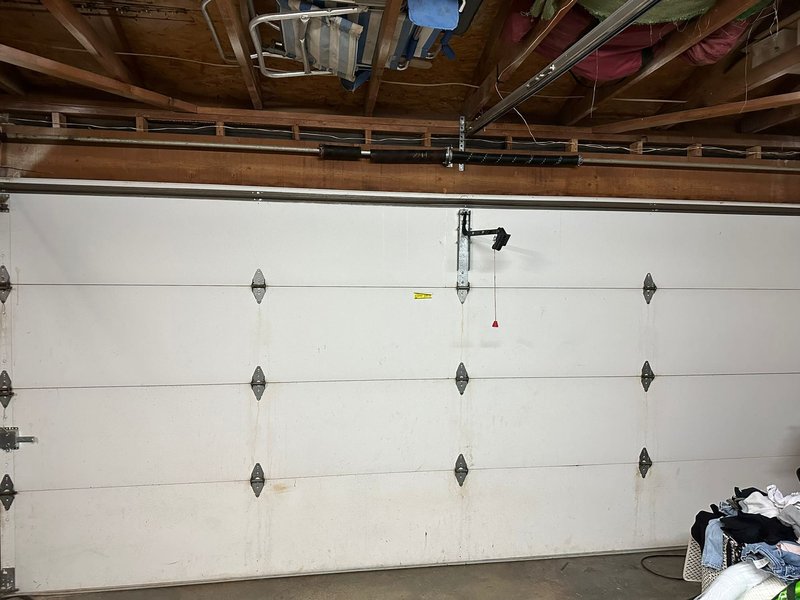
Most Riverside homeowners give almost no thought to their garage door springs until one breaks with a loud bang at six in the morning. At that point the door is stuck, the car is trapped, and a repair call cannot wait. The good news is that understanding your spring system before a failure happens puts you in a much better position: you can recognize early warning signs, budget realistically, and have an informed conversation with your technician.
Why Springs Matter More Than the Opener
A standard residential garage door weighs between 130 and 200 pounds. Your opener motor is designed to guide a balanced door, not to lift dead weight on its own. The springs store energy when the door closes and release it when the door opens, counterbalancing almost all of that weight. When a spring fails, the opener struggles or stalls, and in some cases the door can drop suddenly. This is why a broken spring is a safety issue, not just a nuisance. If you notice the door moving slower than usual or the opener straining, the springs deserve a close look before anything else. A routine garage door maintenance visit includes a spring inspection that can catch fatigue before it becomes a failure.
Torsion Springs: The Standard on Most Modern Doors
Torsion springs are the thick, tightly wound coils you see mounted horizontally on a steel shaft directly above the door opening. When the door closes, the springs wind up and store tension. When you open the door, they unwind and transfer that energy through cables and drums to lift the panels smoothly.
Most homes built in the Inland Empire over the last 25 years use torsion springs because they offer several practical advantages:
- Longer cycle life. A standard torsion spring is rated for roughly 10,000 cycles. High-cycle options rated at 25,000 or even 50,000 cycles are available and well worth considering in a busy household.
- Controlled breakage. When a torsion spring snaps, the steel shaft and the safety cable running through the coil contain the broken ends. The door drops only a few inches rather than crashing down.
- Consistent balance. A single torsion spring (or a pair on heavier doors) sits centered above the door and distributes tension evenly across both sides, which means the door tracks properly and the opener works less.
- Compact fit. Because the spring sits above the opening rather than along the side tracks, it works well in garages with limited headroom or where the ceiling drops quickly on either side.
The main limitation of torsion springs is that replacement requires winding tools and a precise understanding of turns per inch for the specific door weight. The spring is under extreme tension even when the door is closed. This is one repair we strongly recommend leaving to a professional. Attempting it without the right tools can result in serious injury. Our technicians handle torsion spring repair and replacement daily and carry common sizes on the truck for same-day service.
Extension Springs: Common on Older Homes and Low-Headroom Setups
Extension springs are the long, stretched coils that run horizontally above each horizontal track on either side of the door. Instead of twisting like torsion springs, they stretch as the door closes and contract as it opens, pulling the door up through a pulley-and-cable system.
You will find extension springs most often on doors installed before the mid-1990s or in garages where the ceiling is too low to mount a torsion shaft. They also tend to be less expensive to purchase, which is why some builders used them in tract developments to keep costs down.
The trade-offs are real:
- Safety cables are essential. If an extension spring snaps without a safety cable threaded through its center, the broken spring can whip across the garage at high speed. Every extension spring should have a safety cable. If yours do not, this is something to address right away.
- Shorter lifespan. Most extension springs are rated for 7,000 to 10,000 cycles, and the design puts more repeated stress on the end hooks where breaks often originate.
- Uneven wear. Because there are two separate springs, one can weaken faster than the other, causing the door to lift unevenly and drift off track. This uneven wear is a common reason doors end up needing off-track repair in addition to spring replacement.
- More exposure. Extension springs sit in the open along the tracks, where they are more likely to be bumped by a ladder or storage shelving and more susceptible to the corrosion that comes with the humidity swings the Inland Empire sees in late summer monsoon season.
How Inland Empire Climate Affects Spring Life
Riverside and the surrounding communities experience some of the most punishing conditions for metal hardware in Southern California. Summer temperatures regularly push past 105 degrees, and the Santa Ana wind events in fall and winter bring rapid humidity drops that can make metal brittle over time. Homes in lower-lying areas near the river corridor sometimes see overnight humidity spikes that accelerate surface rust on uncoated springs.
What this means practically: a spring rated for 10,000 cycles may reach the end of its useful life closer to the 8,000 cycle mark if it has been exposed to repeated heat extremes without lubrication. A simple twice-yearly application of a garage door lubricant specifically designed for springs (not WD-40, which attracts dirt) can meaningfully extend spring life. This is a core part of any preventive maintenance plan.
Two-story stucco homes common in master-planned communities in Riverside, Moreno Valley, and Corona often have heavier insulated steel doors to manage energy costs. Those doors put more demand on springs, making cycle ratings and correct spring sizing especially important. An undersized spring wears out faster and puts extra strain on the opener motor.
Replacing One Spring vs Both
When one spring breaks, homeowners frequently ask whether they need to replace just the broken one or both. The honest answer depends on the spring type and the age of the system.
For torsion springs, if both coils were installed at the same time and the surviving spring has already gone through most of its rated cycles, replacing only the broken one leaves you with a mismatched pair. The newer spring will be stiffer, the older one more relaxed, and the door will not balance correctly. Most technicians recommend replacing both when they are within a year or two of each other in age.
For extension springs, the same logic applies. Because both springs work as a system and uneven spring strength causes tracking problems, replacing them as a pair almost always makes more sense economically than paying for two separate service calls.
If your springs are more than eight years old and the door is otherwise in good shape, this is also a reasonable time to upgrade to a higher-cycle torsion spring system if you currently have extension springs. The upfront cost is higher, but the longer service life and improved safety often justify it. Use our cost calculator to get a ballpark, or call us at (909) 264-7415 for a free written on-site quote.
Warning Signs to Watch For Between Service Visits
You do not have to wait for a loud break to know your springs are getting close to the end of their life. Watch for these signals:
- The door hesitates or moves in jerks rather than smoothly, especially in the first foot of travel.
- The opener sounds like it is working harder than usual, or it reverses before the door is fully open.
- There is visible rust, flaking, or gaps in the coils when you look at the springs.
- The door does not stay put when you manually lift it halfway and let go; it should remain stationary if the springs are properly balanced.
- One side of the door is visibly lower than the other when it is closed, suggesting uneven spring tension.
Any of these signs warrants a professional inspection. Catching a fatigued spring before it breaks means you can schedule the repair on your schedule rather than reacting to an emergency. If a spring does break and the door comes off its tracks, do not try to operate the door or reattach the cables yourself. Reach out for professional spring service so the repair can be done safely with the right tools.
Related services
When it is time to bring in a pro.