
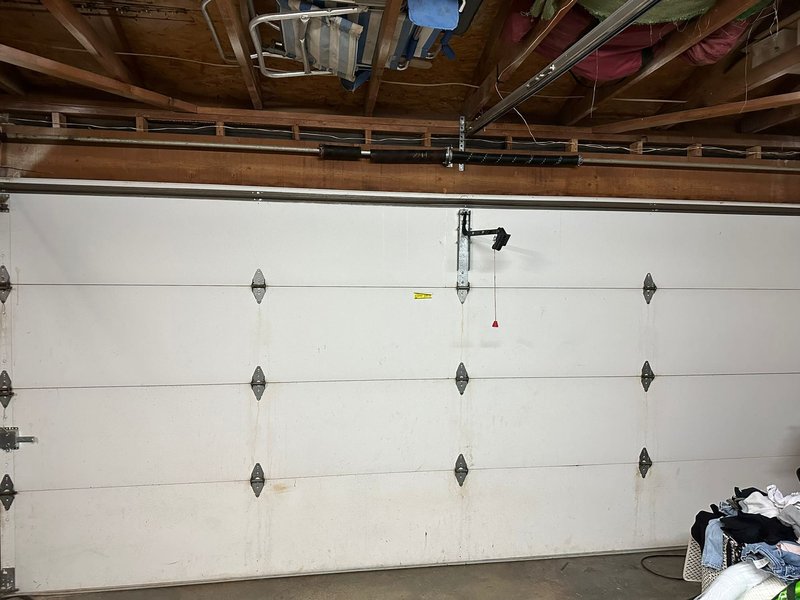
Few garage door failures are as abrupt as a broken torsion spring. One moment the door works perfectly; the next, the opener strains, the door barely lifts, or a loud bang echoes through the garage. If you own a home in Riverside, Moreno Valley, Corona, or anywhere in the Inland Empire, you have almost certainly heard a neighbor deal with this problem. This guide walks you through exactly what happens during a professional spring replacement so you know what to expect before, during, and after the visit.
Why Torsion Springs Fail
The torsion spring system is the workhorse of your garage door. A steel spring, wound tightly around a shaft above the door opening, stores mechanical energy every time the door closes and releases that energy to help the door rise. Most residential springs are rated for roughly 10,000 cycles, where one cycle equals one open and one close. A household that uses the garage door four times a day will hit that limit in about seven years. Inland Empire heat accelerates metal fatigue: summer temperatures inside an un-insulated garage can climb past 130 degrees Fahrenheit, which causes the steel to expand and contract repeatedly, weakening the coils faster than manufacturers rate them for temperate climates.
When a spring finally snaps, it releases its stored tension instantly. The sound is dramatic, similar to a firecracker or a small-caliber gunshot. The door does not fall, because the cables still hold it, but the opener motor must now carry the full weight of the door, often 150 to 250 pounds for a standard steel panel door. Running the opener without spring assistance even once or twice can burn out the motor or bend the door panels, so the door should stay closed until a technician arrives.
Learn more about common warning signs and what factors affect how long springs last on our spring repair and replacement service page.
What Happens During a Service Call
When you call (909) 264-7415, a technician typically arrives the same day for spring failures. Here is how a standard appointment unfolds.
- Initial inspection: The technician examines the broken spring, the shaft, the cable drums, the cables themselves, and the bottom brackets. A spring failure puts stress on every component it is connected to, and a thorough eye catches secondary damage before it becomes a separate service call.
- Spring selection: Torsion springs are not one-size-fits-all. Wire diameter, inside diameter, and overall length must match the door's weight and height. Using an undersized spring causes the door to feel heavy and shortens spring life; an oversized spring can throw the door open too fast. The technician measures the old spring or weighs the door to select the correct replacement.
- Safe winding procedure: The new spring is slid onto the shaft and wound to the correct tension using winding bars, never with a screwdriver or improvised tool. Each quarter-turn adds significant stored energy. This step requires proper training and tools, which is exactly why DIY spring replacement accounts for a disproportionate share of serious garage-related injuries.
- Cable and drum check: Cables fray over time and often show the most wear near the bottom bracket. If the cables are frayed or the drums are cracked, replacing them at the same visit saves the cost of a return trip.
- Balance test: The technician disconnects the opener and lifts the door by hand to waist height, then releases it. A properly balanced door stays in place. If it drifts up, the spring is over-wound; if it drops, it is under-wound. The technician makes fine adjustments until the door holds.
- Opener reconnect and force adjustment: Once the door moves freely, the opener is reconnected and its up and down force limits are confirmed. An opener working against a broken spring may have had its force set too high to compensate, which can prevent the safety reverse from working correctly.
Should You Replace One Spring or Both?
Many doors, particularly those 16 feet wide or larger, use two torsion springs side by side on the same shaft. When one breaks, the other is almost always the same age and has accumulated the same number of cycles. Replacing only the broken spring means the second is likely to snap within weeks or months, requiring another service call and another labor charge. Replacing both at once costs more upfront but usually saves money over the next year and keeps the door balanced, since matched springs wear at the same rate.
For narrower single-car doors with one spring, the choice is straightforward, but it is still worth asking the technician about the spring's remaining service life based on its condition and the approximate age of the door.
Typical Repair Timeframes and What Affects Cost
A straightforward torsion spring replacement on a standard residential door takes 45 to 90 minutes. Longer appointments are needed when cables must be replaced, when the shaft is bent, or when the winding cone is stripped and cannot accept a standard replacement spring. Spring repair on this type of door starts around $240, and the final price varies based on spring size, whether both springs are replaced, and whether additional hardware is needed. Our cost calculator can give you a starting estimate before we arrive, or you can request a free written on-site quote during the visit.
Parts quality matters more than most homeowners realize. Springs sold at home improvement stores are often rated for lower cycle counts than commercial-grade springs a professional stocks. A technician who brings high-cycle springs (rated for 20,000 or even 30,000 cycles) is not upselling you frivolously: those springs can outlast the door panels themselves in a climate as hard on metal as the Inland Empire.
Connecting Spring Health to Overall Door Maintenance
A spring replacement is a natural moment to assess the entire door system. The technician has the door disconnected, the panels at eye level, and all the hardware visible. Loose roller brackets, worn nylon rollers, and cracked bottom seals are easy to spot and inexpensive to address while the door is already being serviced. Skipping these small items now often means an off-track incident or a noisy door that wakes the neighbors at 6 a.m.
Scheduling a routine garage door maintenance visit once a year, independent of any breakdown, is the most cost-effective way to extend the life of every moving part, including the springs. During a maintenance call, the technician lubricates the springs, checks cable tension, tests the opener's force limits, and verifies that the auto-reverse safety features meet current standards. It is the difference between managing your garage door and being managed by it.
If your opener is struggling to lift the door even after spring replacement, the motor itself may have been damaged by running under excessive load. Our opener repair and installation team can diagnose that in the same visit.
Safety Warnings You Should Take Seriously
Online videos make spring replacement look manageable for a handy homeowner. The mechanics are not complicated in principle, but the consequences of a mistake are severe. A spring under full tension stores enough energy to fracture bones or drive a winding bar through a wall if it slips. Professionals use calibrated winding bars, safety cables threaded through the spring coils, and years of muscle memory for how a spring behaves as tension builds. A homeowner attempting the job for the first time has none of that feedback.
Beyond the immediate injury risk, an incorrectly tensioned spring can cause the door to slam without warning when someone is underneath it. If a cable drum is assembled wrong, the cable can jump the drum mid-cycle and the door can go off track, potentially pinning a vehicle or a person. The professional fee is not just for labor; it is for the institutional knowledge that prevents those outcomes.
If your door is currently stuck closed with a broken spring, do not attempt to manually force it open by pulling the red emergency release cord and heaving upward. The door may rise a few inches and then drop without warning. Leave it closed, park in the driveway if needed, and wait for a technician. We offer online booking for same-day and next-day appointments throughout Riverside County.
Related services
When it is time to bring in a pro.