
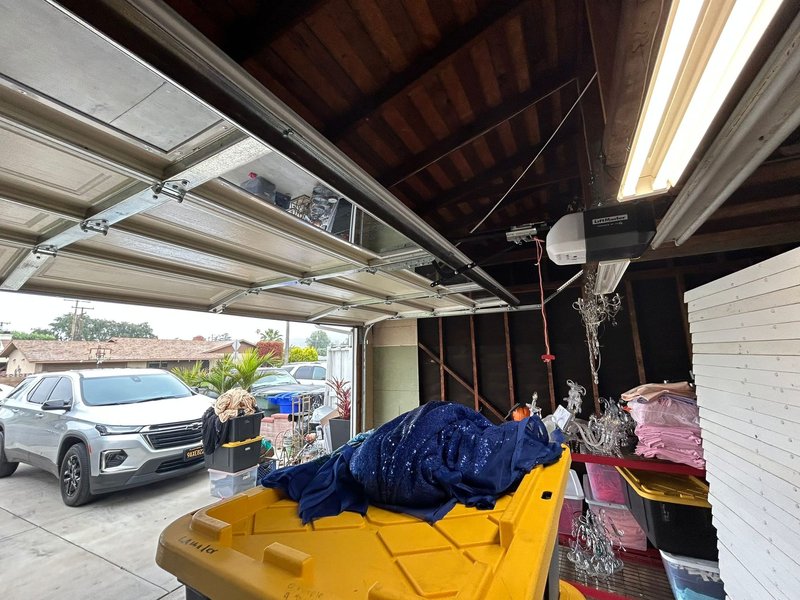
You press the button, the door starts down, and then it stops, shudders, and goes right back up. Nothing looks broken. No grinding noise, no bent track, no obvious damage anywhere on the door. In most cases like this, the real problem is a pair of small plastic boxes sitting about six inches off the garage floor on either side of the opening. These are your safety sensors, and when they are even slightly out of alignment or dirty, the entire door simply refuses to close.
What Safety Sensors Actually Do
Every garage door opener built since the mid 1990s is required to have photo eye safety sensors. One sensor sends a steady infrared beam across the bottom of the doorway, and the other receives it. As long as that beam is unbroken, the opener is allowed to close the door. The moment something interrupts the beam, whether it is a child, a pet, a stray garden hose, or a sensor that is simply pointed a few degrees off center, the opener stops the door and reverses it back open. This is a safety feature, not a flaw, and it has prevented countless injuries over the years. The tradeoff is that the sensors are sensitive to alignment, dust, and sunlight, which makes them one of the most common sources of a garage door that won't close.
Signs the Sensors Are the Problem
- The door closes partway, then reverses back to the open position every time.
- The door won't move downward at all, even though it opens normally.
- One or both sensor units show a blinking or off light instead of a steady glow.
- The door only closes when you hold the wall button down continuously (this bypasses the sensors on many openers and should be treated as a temporary workaround, not a fix).
- The problem comes and goes depending on the time of day, which usually points to direct sunlight hitting the receiver.
Step by Step: Realigning and Cleaning the Sensors
Before assuming you need new parts, walk through this short checklist. Most sensor calls we run in the Inland Empire are solved in under fifteen minutes.
- Look at the lenses. Garage floors collect dust, pollen, and cobwebs, and a thin film on either lens is enough to block the beam. Wipe both lenses gently with a soft, dry cloth.
- Check for solid light. Most sensors have a small LED that glows steady when the beam is connecting properly and blinks or stays dark when it is not. Compare both sides.
- Look for bumped brackets. A stored bicycle, a leaning ladder, or a car bumper can nudge a sensor bracket just enough to throw off the alignment without it looking obviously crooked.
- Loosen, aim, and retighten. Most sensors mount with a single wing nut or thumbscrew. Loosen it slightly, gently adjust the sensor until the indicator light turns solid, and retighten without over torquing the bracket.
- Clear the path. Nothing, including a low shelf, a trash can, or a coiled hose, should sit in the direct line between the two sensors.
- Check the wiring. Sensor wires run along the bottom of the track and get snagged by stored items or chewed by rodents more often than most homeowners expect. A nicked wire can mimic a misalignment problem.
If you want a deeper once-over of the whole system while you are down there, our garage door maintenance service covers sensor alignment along with the rollers, hinges, and hardware that tend to loosen with daily use.
When the Problem Isn't Actually the Sensors
Sensor issues get blamed for a lot of symptoms that are actually something else. If the door won't move at all, even going up, the sensors are not the cause since they only control closing. A door that opens fine but is slow, uneven, or noisy going up usually points to worn rollers, a failing opener gear, or spring tension problems rather than the sensors. Likewise, a door that visibly sags to one side or has jumped its track needs off-track repair, not a sensor adjustment, and trying to force it closed in that condition can damage the opener motor. If your troubleshooting points to the opener itself rather than the sensors, our opener repair and installation team handles both diagnosis and replacement.
Why This Happens So Often in the Inland Empire
Riverside's climate is tough on sensor alignment in ways that surprise a lot of homeowners. Summer heat causes the metal brackets and door track to expand slightly during the day, which can shift a sensor just enough to interrupt the beam by late afternoon. Santa Ana wind events are even harder on sensors, since the gusts shake the entire door assembly and can knock a bracket loose over time, not just during the storm itself. Low winter sun angles streaming directly into a west-facing garage can also wash out a receiver lens for a short window each afternoon, which is why some homeowners notice the door only misbehaves at a certain time of day. None of this means your sensors are defective, it just means they need a slightly more frequent check than homes in milder climates.
When to Call a Professional
Most sensor problems are a five minute fix once you know where to look. Call for help if you have cleaned and realigned both sensors and the door still won't close, if the indicator lights won't turn solid no matter how you aim them, if you see chewed or frayed wiring, or if the bracket itself is bent or cracked. These usually point to a failing sensor unit, a wiring break inside the wall, or a logic board issue on the opener itself, all of which are quick fixes for a trained tech but frustrating to chase down on your own. We run calls like this across Riverside and the surrounding Inland Empire every week, and we are available any hour of the day or night at (909) 264-7415. If you would rather plan ahead than wait for an emergency, you can also book a service visit online, and our cost calculator gives you a ballpark idea of what a repair or sensor replacement typically runs before anyone steps foot in your driveway.
A garage door that won't close is one of the most common calls we get, and it is also one of the easiest to prevent. A quick wipe of the sensor lenses and a glance at the indicator lights every few months will catch most problems before they leave your car stuck outside or your garage open overnight.
Related services
When it is time to bring in a pro.