
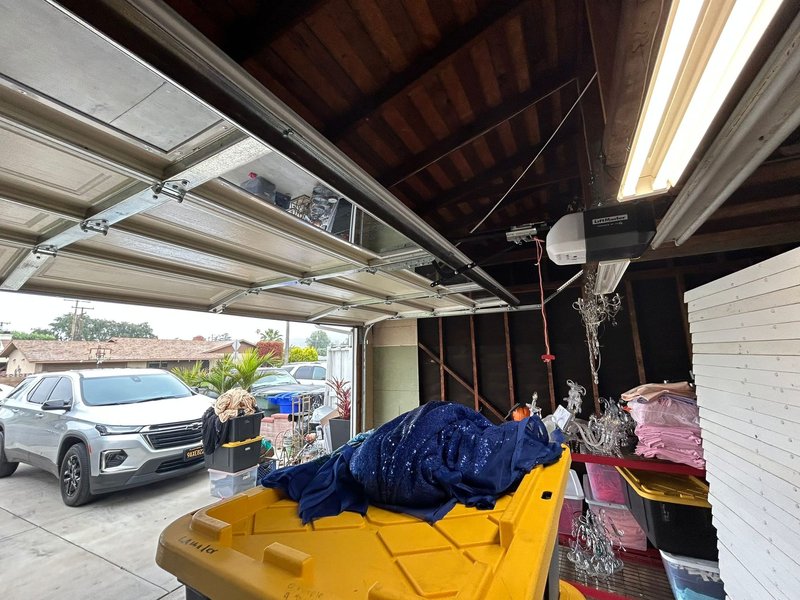
A dent, crack, or buckled section in your garage door is more than an eyesore. In the Inland Empire's intense summer heat, a compromised panel can warp further, throw the door out of balance, and put extra strain on springs and the opener motor. Before you call anyone, it helps to understand how garage door panels work, what damage really means structurally, and what each path, repair versus replacement, will cost you over time.
How Sectional Doors Are Built
Most residential garage doors in Riverside and the surrounding area are sectional doors, made up of four to six horizontal panels stacked on top of each other and connected by hinges. Steel rollers on each side ride inside vertical and curved tracks. When the door opens, those panels pivot at the hinge joints and stack horizontally above the car. Because each panel is a separate piece, one damaged section can sometimes be swapped out without touching the rest of the door.
The catch is that panels are manufactured in specific gauges (thickness), steel grades, insulation ratings, and profile designs. A 16-gauge raised-panel door from one manufacturer will not accept a replacement section from a different brand, even if the dimensions look close. Seams between mismatched panels leave gaps that let in insects, dust, and Inland Empire summer heat, which can push attic-adjacent garage temperatures well above 110 degrees Fahrenheit.
Damage That Is Usually Repairable
Not every dent demands a full replacement. A single panel repair tends to make sense when all of the following are true:
- Only one or two panels are damaged and the rest of the door is structurally sound.
- The door is ten years old or newer. Panels for current production lines are far easier to source than discontinued ones.
- The damage is cosmetic or shallow. A dent that has not buckled the panel's internal bracing or bent the hinge mounting points can often be corrected, or the panel swapped, without disturbing hardware.
- The door still travels straight. If the panels bend but the door still opens and closes without binding, the tracks and cables are likely undamaged.
- Matching panels are available. A technician can often cross-reference the manufacturer's stamp (usually on the top inside edge of a panel) to find an exact replacement section.
Shallow cosmetic dents in steel panels can sometimes be pushed out from the inside, though the results vary with the steel gauge and the shape of the dent. Deep creases rarely return to a smooth surface. For painted or embossed finishes, even a good repair may show a slight color or texture difference after a few years of sun exposure, which is especially noticeable on white doors facing west in the afternoon sun common to many Riverside tracts.
When Replacement Is the Smarter Choice
There are situations where replacing individual panels, or attempting to, ends up costing more than a new door. Consider full replacement when:
- The door is 15 or more years old. Panels for older discontinued models may simply not exist. A fabrication shop can sometimes custom-cut a section, but the labor and material cost often approaches or exceeds a new door.
- Multiple panels are damaged. Replacing three or more sections eats into the cost difference quickly, and a new door will carry a fresh warranty on all components.
- The door is already underperforming. If you have been dealing with noise, slow operation, or recurring off-track issues, those problems point to worn hardware throughout the door. Patching one panel while leaving tired springs and rollers in place is a short-term fix. A full garage door maintenance inspection can reveal whether the underlying hardware is still serviceable.
- The structural frame is bent. A vehicle impact that caves in a panel often also bends the door's end stiles or the bottom fixture. When the steel frame that holds the hinges is twisted, the whole door loses alignment, and no panel swap will restore it.
- You want to upgrade insulation. Many older Inland Empire homes have single-layer steel doors with no insulation value. If you are replacing panels anyway, upgrading to a two-inch polyurethane-core door can meaningfully reduce heat transfer into the garage, which matters for any living space above or adjacent to the garage.
The Structural Check You Cannot Skip
Before committing to either path, a technician should check the components that the impact may have loaded beyond their design limit. A hard vehicle strike transfers force through the panel into the hinges, then into the track brackets, and finally into the torsion spring system above the door. Springs that have been shock-loaded can develop micro-fatigue even if they look intact. Replacing a panel on a door whose springs are close to failure is a recipe for an expensive emergency call in six months. Springs for a two-car door start around $240 for repair service, but a sudden failure can also damage the opener or, worse, drop the door unexpectedly. For a thorough look at spring condition, see our guide to spring repair and replacement.
Similarly, if the door came off its track during the impact, do not attempt to force it back manually. A door that has jumped the track can shear a cable, bend a roller bracket, or snap a bottom corner fitting. Our team handles off-track garage door repair as an emergency service because forcing the panels along a bent or misaligned track causes secondary damage that escalates repair costs.
Getting an Accurate Cost Comparison
The only honest way to compare repair versus replacement costs is with measurements in hand. A technician who examines the door in person can tell you the panel's manufacturer, gauge, insulation value, and whether replacement sections are available in the current supply chain. They can also check the hardware, balance the door on the springs, and give you a written estimate for each option.
Our cost calculator can give you a rough starting range, but panel pricing varies considerably by door thickness, style (flush, raised, carriage), and finish. An on-site quote removes the guesswork. We provide free written on-site quotes with no obligation, so you can see both numbers side by side before deciding.
One factor homeowners sometimes overlook is HOA requirements. Many communities in Riverside, Corona, and the surrounding Inland Empire specify that garage doors must match the original style and color of the home's exterior. If your current door style has been discontinued, you may need to replace the full door rather than mix a new panel into an older surround, just to stay compliant with your CC&Rs. Check your HOA documents or email your management company before ordering parts.
Making the Door Last After the Repair
Whether you repair a panel or install a new door, the steps that protect your investment are the same. Lubricate all rollers, hinges, and the torsion bar bearing plates twice a year, once before summer heat peaks and once before the cooler months when Santa Ana wind events are most common. Check the bottom weatherseal annually; a cracked or compressed seal lets in both water during rare heavy rains and fine dust that works its way into roller bearings. Keep the tracks clear of debris, and test the auto-reverse safety feature monthly by placing a two-by-four flat on the floor under the door. If the door does not reverse on contact, schedule a garage door opener adjustment before using the door again.
With consistent care, a quality sectional door in the Inland Empire should give you 20 or more years of reliable service. Repairs done promptly, before a bent panel stresses the hinges and tracks further, stretch that lifespan and keep repair costs predictable.
If you have a damaged panel and want a straight answer on the best path forward, call us at (909) 264-7415 any time, day or night. We are owner-operated, available 24 hours a day, and will give you an honest recommendation with a written quote at no charge.
Related services
When it is time to bring in a pro.