
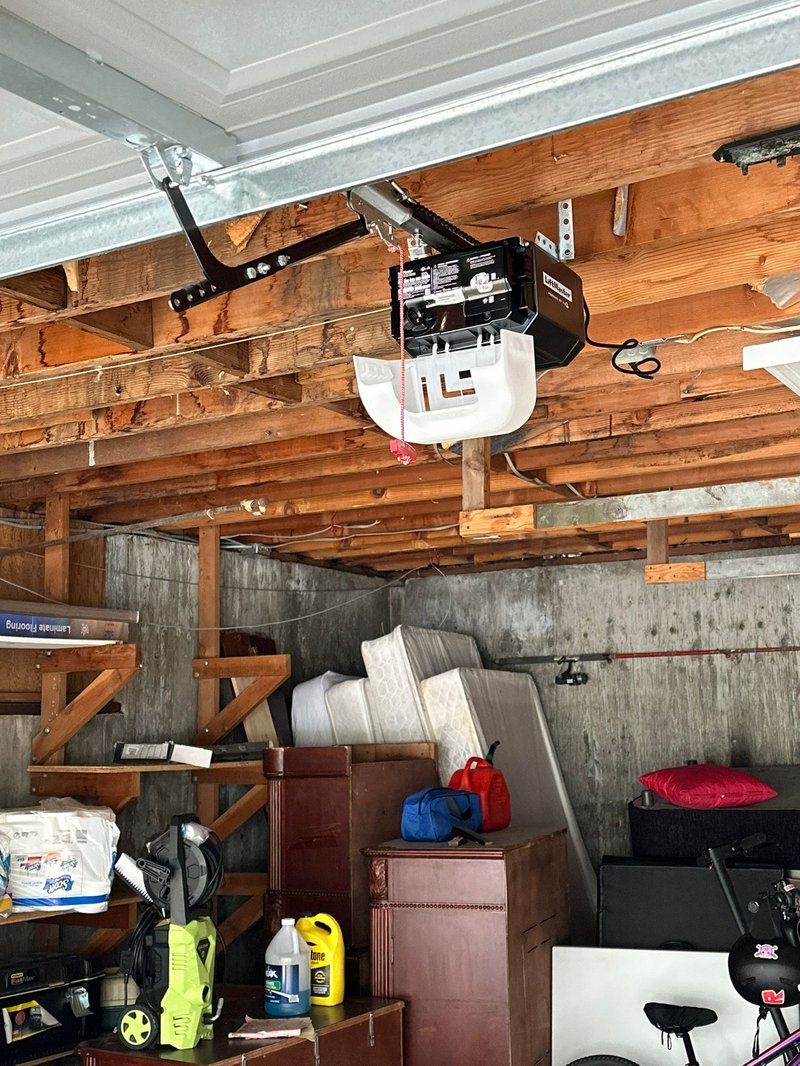
When the power drops in Riverside, Corona, or anywhere else in the Inland Empire, most households immediately think about the refrigerator, the air conditioning, and whatever is plugged into the charger. The garage door rarely crosses anyone's mind until a car is stuck half in and half out of the driveway. Every garage door opener built in the last few decades includes a manual release mechanism made exactly for this moment, yet a surprising number of homeowners have never touched it and are not confident using it correctly under pressure.
Why the Manual Release Exists
A residential garage door can weigh anywhere from about 130 pounds for a lightweight single door to well over 400 pounds for a large two-car insulated door. The opener motor does the heavy lifting day to day, but the whole system is engineered so the door can still move by hand if the motor loses power or fails mechanically. That is the entire purpose of the manual release: it disconnects the trolley, the piece that rides along the opener's rail and pulls the door open, from the drive mechanism. Once disengaged, the door swings free on its own tracks and is lifted or lowered using the springs, not the motor.
Finding the Release Cord and Understanding How It Works
Look up at the rail, the long metal arm running from the motor housing to the top of the door. Hanging from the trolley is usually a cord with a red plastic handle. Pulling that handle down and toward the motor unit disengages the trolley from the drive carriage, and you will often hear or feel a small click as it lets go. Once disengaged, the door is no longer connected to the opener at all and moves purely on the strength of its torsion or extension springs, guided by the tracks on either side.
Some older systems, and a few commercial-style units, use a small lever instead of a pull cord. If you are not sure which style your home has, or where the handle sits relative to your reach, that is a good question to ask during a routine visit. Our technicians will gladly show you during any maintenance appointment so it is not something you are figuring out for the first time in the dark.
Step by Step: Disengaging and Re-Engaging Safely
- Close the door fully before pulling the release cord whenever you can. Disengaging a door that is only half open, especially one with worn or mismatched springs, can cause it to drop suddenly and without warning.
- Pull the cord firmly straight down and toward the motor until the trolley releases. Avoid yanking it sideways, which can bend the release arm over time and make it harder to use next time.
- Lift the door by hand using both hands near the bottom corners, not the center panels, and lift in one smooth motion rather than jerking it upward.
- If the door feels unusually heavy, unusually light, or wants to slam shut on its own, stop immediately. That is a sign the springs are no longer balanced correctly, and forcing the door further can cause it to drop hard or pull a cable off the drum.
- To reconnect once power returns, guide the door to the fully closed position, then either pull the release cord a second time or push the trolley back toward the carriage until it clicks into place. Test the opener with one short press before trusting it with a vehicle underneath.
Gate Operators Have a Backup System Too
If your property also has an automatic driveway gate, the same basic idea applies. Most swing and slide gate operators include a manual release, often a key-locked arm or lever near the base of the motor housing, that lets you push the gate open by hand during an outage. The release points are usually less obvious than a garage door's red cord, and forcing the wrong part of a gate arm can bend hardware that is expensive to straighten. If you have never located your gate's release before, it is worth a quick look now rather than during an actual outage, and our electric gate repair team can point it out and test it during a service visit.
Mistakes We See After Storms and Outages
Santa Ana wind events and the occasional winter storm are the most common causes of outages across Riverside, Moreno Valley, and Corona, and after these events we get a predictable set of calls. The first is a door that was forced down while disengaged and jumped its track, which we cover in more detail in our guide to off track garage door repair. The second is homeowners who leave the opener disengaged for days after power returns, simply because they forgot to reconnect it, leaving the door vulnerable to being lifted from outside by hand, which matters if you keep tools, bikes, or anything else of value in the garage. The third, and the one we see most, is a homeowner who assumes a door that is hard to lift by hand is just stiff from age, when in reality a spring has already weakened or snapped and the motor had been quietly masking the problem for months before the outage ever happened.
Keeping the System Reliable Before the Next Outage
The best time to learn your release mechanism is before you need it with a flashlight between your teeth. A few minutes of preparation goes a long way toward making the next outage a non-event instead of a scramble.
- Test the release cord once or twice a year, ideally as part of a seasonal check, and confirm it hangs at a height anyone in the household can reach and use.
- Keep a flashlight near the garage entrance itself, not stored inside the garage where you cannot get to it without power.
- Ask about battery backup if you do not already have it. A battery backup unit keeps the opener running through most short outages and removes the need for manual release altogether. This is worth discussing if you are due for an opener repair or installation.
- Have your springs and cables inspected on a regular schedule. A properly balanced door is the single biggest factor in how safely it behaves once it is disconnected from the motor.
When to Call a Professional
If pulling the release cord does not disengage the trolley, if the door will not hold its position once disengaged, or if you hear grinding or popping sounds while operating it by hand, stop and call for help rather than forcing it further. These symptoms almost always point to a spring or cable problem rather than an opener problem, and they can turn dangerous quickly if pushed. We are available 24 hours a day at (909) 264-7415 for exactly these situations, and every visit includes a free written on-site quote so you know the cost before any work begins. For a rough idea of pricing ahead of time, our cost calculator is a good starting point, and you can book an appointment online whenever it is convenient for you.
Related services
When it is time to bring in a pro.