
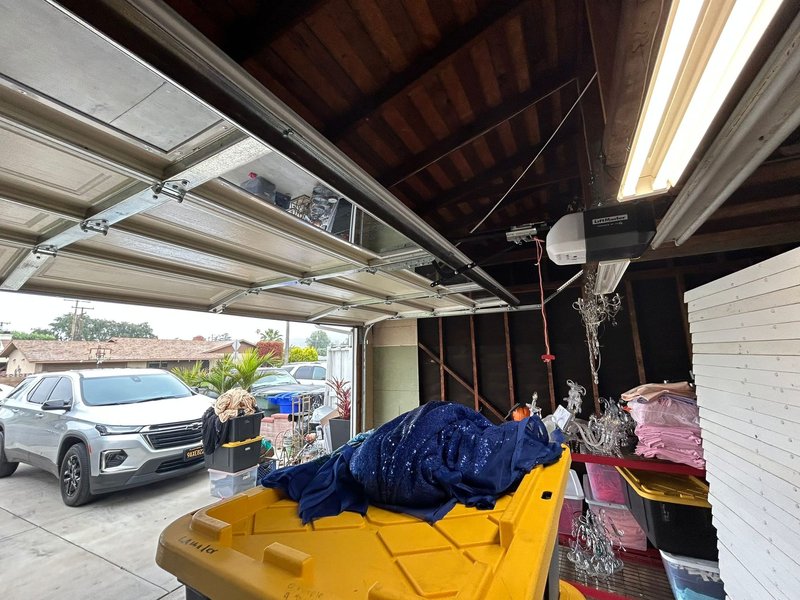
Most Inland Empire homeowners never think about their garage door cables until one snaps. Then, without warning, the door drops on one side, grinds to a halt halfway up, or simply refuses to budge. It is a stressful moment, especially when you are trying to leave for work or get your car out of the driveway on a hot Riverside morning. This guide walks you through exactly what happened, what you should and should not do, and how a professional repair works.
What Lift Cables Actually Do
Your sectional garage door does not rise on its own. It relies on a system of torsion or extension springs that store mechanical energy, plus a pair of steel lift cables that translate that energy into movement. The cables wrap around drums mounted at each end of the torsion bar (or thread through pulleys on extension-spring systems) and attach to bottom brackets at the lower corners of the door. When the spring unwinds, it pulls the cables, which lift the door along the vertical tracks.
Every strand of that cable is under significant tension even when the door is closed. A standard double car door can weigh 150 to 200 pounds. The cables and springs share that load constantly. Over years of daily cycles, fraying begins on individual wire strands, especially where the cable bends around a drum or pulley. Eventually, enough strands break that the remaining ones cannot hold, and the cable snaps.
Why Cables Break: The Most Common Causes
Understanding the cause helps you prevent the next failure. In the Inland Empire, a few factors accelerate cable wear faster than the national average.
- Age and cycle count. Most residential lift cables are rated for roughly 10,000 cycles. If your household opens and closes the door four times a day, that is about seven years. Many Riverside homes with original cables from the early 2000s are well overdue.
- Dry, dusty conditions. Unlike coastal climates, the Inland Empire air is low-humidity and carries fine particulate. Cables that are never lubricated corrode from the inside out. Rust weakens individual strands long before you see it.
- Spring failure. A broken torsion spring puts the full door weight on the cables in a fraction of a second. That sudden shock load can snap a cable that was already worn. If one spring breaks, check the cables; if one cable snaps, check the springs. They often fail together. Our team handles spring repair and replacement alongside cable work so you get a complete fix, not a half-measure.
- Bottom bracket rust. The cable anchor point at the bottom corner of the door is constantly near the ground. In homes with concrete slabs and seasonal moisture, that bracket corrodes and can fray the cable end where it attaches.
- Poor initial installation. Cables that were never tensioned correctly, or that were undersized for the door weight, wear out faster and can jump their drums before they snap entirely, causing the door to go off track.
What You Will See and Hear When a Cable Snaps
The failure is usually unmistakable. You may hear a loud bang, similar to a firecracker, as the cable lets go. One side of the door drops several inches while the other side stays put, leaving the door visibly tilted. If the spring also fails, the door may drop entirely and jam into the floor or frame. The opener motor may run but accomplish nothing, or it may trigger the built-in safety reversal and stop. In some cases the cable simply frays so badly that the door binds in the tracks without a sharp noise at all.
Do not try to operate the door manually or with the opener after a cable failure. Even if the door moves a little, the uneven tension can send it off its tracks, damage the panels, or cause the remaining cable to snap and send hardware flying at high speed.
What Not to Touch (This Section Could Prevent a Trip to the ER)
Garage door spring and cable systems are among the most dangerous components in a residential home. The springs store enough energy to cause severe injury or death if released suddenly. Here is what to leave alone until a trained technician arrives.
- The torsion spring above the door. It is under hundreds of foot-pounds of torque. A proper release requires calibrated winding bars and training. Never attempt to unwind or touch it.
- The cable drums on the torsion bar. These are bolted in place under spring tension. Loosening them without first releasing the spring can cause the bar to spin rapidly.
- The bottom bracket. The cable attaches here under tension from the spring. Even on a door that appears relaxed, the bracket can release violently if the cable shifts.
- A second attempt with the opener. Running the motor against a jammed, tilted door strains the trolley, the rail, and the door itself. Turn the opener off and leave it off.
Your one safe action is to pull the red emergency release cord to disconnect the door from the opener trolley, then gently lower the door by hand if it is stuck partway. Keep children and pets out of the garage entirely until the repair is complete.
How a Professional Cable Repair Works
When our technician arrives, the first step is a full assessment of both cables, the drums, the torsion spring, and the bottom brackets. Replacing only the snapped cable while leaving a worn companion cable is a false economy; the second cable usually fails within weeks. We always recommend replacing both cables as a set.
The repair sequence on a standard torsion-spring system goes like this: release the spring tension safely using winding bars, loosen the set screws on the cable drums, remove the broken cable and any frayed remnants from the drum groove, thread the new cable through the bottom bracket and up to the drum, seat the drum correctly, tension the spring to the proper number of turns for the door weight and height, and test the balance by hand before reconnecting the opener. The entire job typically takes 45 to 90 minutes for a single door.
If the broken cable caused the door to go off track, the technician will also re-seat the rollers and check the tracks for bends before calling the job complete. Preventive garage door maintenance visits catch fraying cables before they snap, which is worth scheduling every year or two in our climate.
Cost and What to Expect
Cable repairs start around $240 for most single and double car doors in the Riverside area. That covers both cables as a set, hardware, and a balance test. If the spring also needs replacement, that is additional work with its own parts and labor. We provide free written on-site quotes before touching anything, so you know the full number before we start. There are no hidden trip fees for calls within our service area. Call us any time at (909) 264-7415, day or night, including weekends and holidays.
If your opener has been struggling to lift the door in recent weeks, the cables were likely already fraying. A door that opens unevenly, makes grinding sounds, or shakes in the tracks is telling you something is wrong before it fails completely. Catching it early saves money and keeps your household safe. You can also use our cost calculator to get a quick estimate or book a service visit online at any hour.
Preventing the Next Cable Failure
Cables last longest when the whole system is in balance. A door that is properly balanced puts equal, moderate load on both cables throughout its travel. Here are the habits that extend cable life in Inland Empire conditions.
- Lubricate the cables, drums, and rollers twice a year with a garage-door-specific spray lubricant. Avoid WD-40, which evaporates quickly and leaves no lasting film.
- Test door balance every six months: disconnect the opener and lift the door by hand to waist height, then let go. A balanced door stays put. A door that falls or shoots up has a spring tension problem that stresses the cables.
- Replace springs and cables at the same service interval. If your springs are at 10 years or 10,000 cycles, replace cables at the same time even if they look fine.
- After Santa Ana wind events, inspect the bottom seal and bottom brackets for debris or impact damage. Wind-driven grit works into cable strands and accelerates corrosion.
- If you notice one side of the door moving faster or slower than the other, call a technician before the slower side snaps. Asymmetric wear is an early warning sign.
A well-maintained cable set on a properly balanced door can reach 15,000 cycles or more. The investment in annual maintenance is a fraction of the cost of an emergency repair at 10 p.m. on a summer night, though we are here for that too.
Related services
When it is time to bring in a pro.